On March 18, 2026, FIFA made an announcement that will forever transform the way we understand world football rankings. The FIFA rankings, traditionally updated at the end of each international window, will now be calculated and published in real time during every men's and women's international match. The first practical application of this system is already taking place during the March 2026 window, which includes the crucial World Cup qualification playoffs.
How Does the New System Work?
The FIFA ranking system has been based since 2018 on a modified Elo formula, the same method used in chess to rank players by performance. Each result affects both teams' scores based on several factors: the match's importance, the relative strength of opponents, and the margin of victory.
Until now, these calculations were performed cumulatively and published at the end of each international window, approximately every one to two months. The last official update took place on January 19, 2026, and the next was scheduled for April 1, 2026. With the new system, that wait disappears entirely.
From now on, every goal, every result, every minute of play will feed the algorithm in real time. FIFA's servers will process each match's data as it unfolds, and rankings will be automatically updated at the final whistle of each fixture. But the true innovation goes further: during the course of a match, fans will be able to see a live projection of how the current result would affect ranking positions.
The Technology Behind the Change
To make this real-time update possible, FIFA has developed an impressive technological infrastructure. The system uses a globally distributed network of servers that process data from multiple simultaneous matches. The modified Elo formula runs in real time, taking into account all matches being played on the same FIFA date.
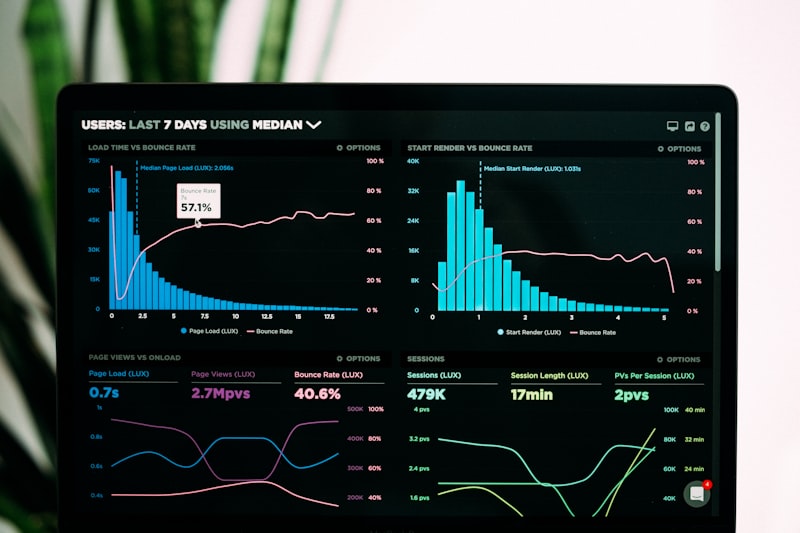
The platform incorporates a visualization dashboard integrated into FIFA's official app and website, where users can follow ranking fluctuations while watching matches. A widget displays each team's current position, projected position based on the partial result, and the points each team would gain or lose.
The algorithm also manages interdependencies: if two simultaneous matches affect the same team indirectly (for instance, a direct rival at another venue), the system recalculates projections in a chain, offering a complete picture of each result's consequences.
Why Did FIFA Make This Decision?
The primary motivation is to improve the fan experience. In the era of instant information, waiting weeks to see how a result affects rankings felt anachronistic. Fans want real-time data, and FIFA has responded to that demand.
Additionally, the system aims for greater transparency. By showing live projections, spectators can understand exactly how each goal and result impacts the global ranking. This eliminates the "black box" feeling many associated with periodic ranking updates.
Another key factor is competitive relevance. With 48 teams qualifying for the 2026 World Cup, seedings and draws matter more than ever. Real-time rankings mean every preparation match has an immediate and visible impact on each team's position heading into the tournament.
Impact on Fans and the Viewing Experience
For fans, this innovation adds a new layer of excitement to every international match. Imagine watching Spain vs. France and seeing how, with each goal, ranking positions oscillate on screen. Spain, currently world number 1, could see their position threatened in real time if they lose to France, ranked number 3.
Social media is already buzzing about the change. Ranking debates, which previously concentrated on a few dates per year, will now be constant. Every round of international fixtures will generate new conversations, statistics, and analysis.
Broadcasters also benefit, as they have instantly updated data to enrich their coverage and analysis. Betting companies, meanwhile, will need to adapt their models to this new reality of real-time data.
Impact on the 2026 World Cup
The timing of this announcement is no coincidence. With the 2026 World Cup in the United States, Mexico, and Canada just around the corner, real-time rankings will have direct implications for the tournament. Group seedings are largely determined by FIFA ranking position, and now every match before the draw will have a visible and immediate weight.
The current ranking shows Spain as the undisputed leader, followed by Argentina in second, France in third, England in fourth, and Brazil completing the top 5. But with the real-time system, these positions can shift fluidly with each international window.
The qualification playoffs taking place during this same March window are the first official matches with the real-time ranking system active. Teams fighting for the last World Cup tickets can see their global position change while they play, adding extra pressure and a new narrative element to these decisive encounters.
A Brief History of FIFA Ranking Evolution
The FIFA World Ranking was introduced in 1992, initially with a relatively simple points system. In 2006, the first major reform was carried out, introducing a more sophisticated calculation method that considered opponent strength and match importance.
The revolution came in 2018, when FIFA abandoned its old system and adopted a modified version of the Elo rating, inspired by the system used in chess since the 1960s. This change was widely praised by the football statistics community, as the Elo system is mathematically more robust and better reflects teams' actual performance.
Now, in 2026, the next evolution is not about the formula itself, but about the speed and accessibility of data. The modified Elo formula remains the same, but the infrastructure surrounding it has been completely transformed to deliver instant results.
Conclusion
The real-time FIFA ranking system marks a before and after in how we consume and understand international football. By bringing data to fans immediately, FIFA not only modernizes its product but transforms every international match into a richer, more complete experience. With the 2026 World Cup as a backdrop, this innovation promises that every goal will carry meaning beyond the scoreboard.